Oasis in a Sea of Humanity: Sea Turtles of Mexico’s Yucatan Peninsula

“We may have to walk a bit to see a turtle,” I told my 11-year-old daughter Karina as the huge supermoon rose over the Caribbean. My family was standing on X’cacel beach, one of Mexico’s most important nesting beaches for green turtles, located in a national park near Playa del Carmen on Mexico’s Yucatan Peninsula.

DSC_0222

As it turned out, we only had to walk about 20 feet before a dark round shape appeared in the surf.  The turtle emerged right in front the research station run by local organization Flora, Fauna y Cultura de Mexico. To give the green turtle space to find a good spot to lay its eggs, we retreated back up the walkway, only to have the turtle follow us up the path. It eventually changed its mind, however, and made its way back to the water.

DSC_0487It wasn’t long before several other turtles came up on the beach. We waited until the closest turtle was laying its eggs before approaching to avoid disturbing it at a sensitive point in the process. This was also a green turtle, a female weighing probably over 200 pounds. Its multicolored shell appeared faintly white in the moonlight. Though I’ve worked with sea turtles for more than a decade, this was the first time Karina had seen one laying eggs, and she was entranced by the spectacle of the ancient ritual.

X’cacel is located on a nondescript road; no signs promote this incredible place, which in tourist-friendly Mexico may be a good thing. Turtles nest all along the stretch of beach from Cancun to Tulum known as the Riviera Maya, but this is one of the only spots where the beach is free of large resorts and hotels. Lights, beach furniture, and crowds all reduce the number of turtles that come up to nest, so undeveloped stretches like this are critical to keeping these ancient reptiles around.

DSC_0376

Flora, Fauna y Cultura has spent the past 30 years protecting three turtle species that nest on more than 10 beaches in the region. These turtles face an array of threats including human consumption of their eggs and meat, and here – perhaps more than anywhere else in the world – coastal tourism development. Despite being a national park, known as Santuario de la Tortuga Marina Xcacel-Xcacelito, Xcacel still faces a threat of having its natural coastal area developed into big resorts.

The next morning, we headed over to Akumal (Mayan for “Place of the Turtles”), which has a bay well known for the green turtles who feed on the seagrass. We got there early to beat the crowds and put on our snorkels and headed out in search of the ancient reptiles. Before long, my wife found a turtle calmly grazing on the grass and we quietly watched it at a distance. Its beautifully patterned orange, brown, and gold shell was much more clear than the one we’d seen the night before on the beach.

We had the young green turtle to ourselves for about 15 minutes before other snorkelers moved in. The reptile moved slowly along the seagrass, occasionally rising gently to the surface to fill its lungs before sinking back to the bottom. Most of the observers gave the turtle enough space, though one overzealous snorkeler eventually drove the turtle away by getting too close and trying to follow it with a video camera. Exhilarated by the experience, my daughter said later that watching that turtle go about its business gave her hope for the future of this species.

SAM_0092

By the time we were done, dozens more people were getting into the water. After we got out, we had a chance to chat with Paul Sanchez-Navarro, the tall scholarly director of Centro Ecologico Akumal, an organization that works to protect turtles both in the water and while nesting in this area. He explained that the large numbers of people swimming in the bay have a real impact on the turtles that feed on the seagrass, causing them to eat less and increasing stress. The good news is that a new management plan should be in place soon to enforce how visitors and tour guides act while around the turtles.

That evening, we headed south to Tulum. Everything slowed down as we turned off the main highway and drove our rental car over the frequent speed bumps along the road towards Sian Ka’an Biosphere Reserve. At Hotel Nueva Vida de Ramiro, a local hotel that works to minimize its ecological footprint while creating an inviting setting, most of the grounds are planted with native trees.  The small resort hosts rangers from Flora, Fauna y Cultura and a hatchery to protect the eggs laid by turtles that come up this stretch of beach.

After settling into the hotel, I met up with Lluvia Soto, the young and friendly Country Director for SEEtheWILD partner Global Vision International (GVI). We hopped into her SUV, a requirement for traversing the rough road into Sian Ka’an, the only major protected area along the coast south of Cancun. GVI is partnering with Flora, Fauna y Cultura to monitor a formerly unprotected stretch of nesting beach (used by loggerhead and green turtles) inside the park.

After more than an hour of navigating the flat dirt road through coastal forest and mangrove, we emerged onto a thin peninsula of land, barely wider than the beach and the road, sandwiched between turquoise ocean and a dark blue lagoon. This beach would be one of the more beautiful I’ve ever seen if it weren’t for the stunning amount of trash, washed up here from around the world. Learn how trash affects sea turtles here.

Even in this oasis of nature, the turtles need to crawl through trash to find a place to lay their eggs, and the emerging hatchlings are smaller than the plastic bottles and flip flops. Part of GVI’s work in the area is to reduce this waste; their staff and volunteers do weekly clean-ups in the reserve, which can result in up to a ton of trash collected in a day. They have also set up a recycling center in the nearby town of Punta Allen, located within the refuge. Learn more about this sea turtle volunteer program.

That evening, back at Nueva Vida, the rangers knocked on our door to let us know that a turtle was nesting right in front of the hotel, one of the few to turn off its lights that face the water during nesting season and remove furniture from the beach at night. Such common-sense measures are a necessity when sharing a beach with sea turtles, but unfortunately, many resorts here do not make the effort.

This turtle, a green, headed towards the resort’s hatchery but changed its mind and returned to the water without nesting. Fortunately another green turtle emerged just a short walk down the beach, so we were able to see the whole nesting process, from digging the nest and laying the eggs to camouflaging the nest to hide it from predators. My wife, also a turtle conservationist, helped the ranger collect data on the turtle while I explained the fascinating process to a couple of tourists who happened upon the scene.

On the way back, we saw a fresh set of tracks that led to a lounge chair in front of a brightly lit resort. It was clear from the tracks that the turtle had turned around without nesting once it met the chair– further evidence that resorts like this one have replaced poaching on this beach as the biggest threat. Learn more about how coastal development affects sea turtles.

Our tour of the area’s turtle beaches finished up with a meeting with our friends at Flora, Fauna y Cultura and a group of Mayan youth who patrol a beach in nearby Tulum National Park, near the town’s famous ruins. This beach, with its location near the town, is a hotspot for egg poaching. Our Billion Baby Turtles program and our partners at Lush Cosmetics (through its Charity Pot program) are helping to fund this program, which provides employment for these young men while helping to protect an important nesting beach for green turtles and hawksbills.

DSC_0228

During our visit, we walked with the turtle protectors over to the beach. While my daughter buried her feet in the water, the young mean told us about their hard work. Each night, they spend the entire night on the beach, walking up and down the sand in search of emerging turtles. At dawn, they are picked up and return home to rest and recover. It’s this kind of dedication that is needed to keep the turtle returning to these beaches year after year.

Share This:

Bruce Poon Tip and the Future of Tourism

What is the Future of Tourism? Well that is a question no one can answer for certain, however we can form an educated outlook. One company, G Adventures, powered by the entrepreneurial guru known as Bruce Poon Tip is changing our planet for the better.

Bruce Poon Tip at the South Pole. Photo Courtesy: G Adventures

Bruce Poon Tip at the South Pole.

Bruce Poon Tip, was not a backpacker, however in 1989 he had no other options but to backpack to see the parts of the world he wanted to. It was from these experiences that he discovered the need to provide organized travel that gave cultural immersion, freedom and comfort to the masses.

“Many areas of tourism are being held accountable for environmental and cultural impact,” says Bruce. “The travel industry is under fire, they need to be educated. Travel agents need to provide a professional service; they need to know where the money is going locally.”

Bruce Poon Tip receiving an Amazon Clense. Photo Credit: G Adventures

Bruce Poon Tip receiving an Amazon Clense. Photo Credit: G Adventures

By 2020 the United Nations World Travel Organization predicts that annual international tourists will reach 1.6 Billion. Ten years ago 1 in 5 people taking a holiday chose an all-inclusive; today that number has grown to 75%. In most all–inclusive package tours more than 80% of travellers’ fees go to the airlines, hotels and other international companies, not to local businessmen and workers.

infographic

Tourism has the power to affect cultural change. Successful development of a resource can lead to numerous negative impacts. Among these are overdevelopment, assimilation, conflict and artificial reconstruction. While presenting a culture to tourists may help preserve the culture, it can also dilute or even destroy it. The point is to promote tourism in the region so that it will provide both incomes and create respect for the local tradition and culture. There is a natural tipping point, where tourism often grows into mass-tourism. Mass Tourism leads to the over consumption, pollution and lack of resources.

G Adventures is one of the biggest tour operators that utilizes a sustainable tourism model and sets a benchmark for others. With their non-profit organization Planeterra, they not only support local businesses on the ground, they also create an opportunity for these same businesses to prosper from tourists. Let’s look at Peru, G Adventures is the largest tour operator on the Inca Trail with over 30% market share and 500 local people employees. The Inca trail sees hundreds of traveler’s daily, many of whom using products that harm the natural environment around Machu Picchu. Esencia Andina is a micro enterprise owned and managed by two local Peruvian women. With the support of Planeterra foundation they are producing biodegradable products for travelers and staff to use while they trek along the Inca Trail, making travel and tourism more sustainable.

Esencia Andina owners and their biodegradable products. Photo Credit: Planettera Foundation

Esencia Andina owners and their biodegradable products. Photo Credit: Planettera Foundation

Some things will never change. Airlines base their routes around business travelers. Sure they also offer carbon offsets to their guests to say they have one foot in the door of environmentally sustainable practices. Some airlines such as Air Canada have even gone as far to experiment with bio fuels. But is that enough? Many critics of carbon offsetting claim greenwashing, that it gives the perception of environmentally friendly practices when in reality the business fails to meet such claims.

There is a way the Airline industry could go one step further by rewarding the travelers who choose to travel responsibly. Let’s say they provided discounts to travelers who chose to travel with a responsible tourism operator such as G Adventures. The airline industry could regulate fares based on the type of travel a person does. Surely that connection is tangible and something the everyday consumer can see as an environmentally friendly way of travel that promotes sustainable tourism.

So how do you choose a tour operator that offers sustainable tourism? You can visit TIES and research those companies that are making a difference in sustainable community development. Those companies that are connecting with local business owners, hotels and bus drivers in a region. Companies that pay fair trade prices. Those companies that are fulfilling and maintaining a cycle that supports the local people and don’t take money out of the country.

So does the future of tourism include Bruce Poon Tip? Yes it does, and for that we should be grateful. Here is a man who is leading by example, who created a movement and has many other organizations following his lead on sustainable tourism practices. If you have the opportunity to hear Bruce speak at any of one of the various Future of Tourism conferences hosted by G Adventures around our globe, do yourself a favor and attend.

Bruce Poon Tip speaking at the Future of  . Photo Credit: G Adventures

Bruce Poon Tip speaking at the Future of Tourism. Photo Credit: G Adventures

Loop Tail
Bruce is a visionary, a man passionate about helping others and changing our planet for the better. We can assure you that his first book entitled “Looptail” is the heart and soul of a sustainable model. A book that combines his passion and entrepreneurial instincts that shaped his highly successful international travel company into the phenomenon it is today. A book that reveals his unusual management secrets that keeps his employees engaged and customers extremely happy. Looptail will be released on September 17, 2013 and is available now on Amazon.com and Chapters.ca for presale.

Share This:

Enter the London 10km Run & Represent Tourism Concern!! Join today

There is still time for you to enter the famous London 10km Run and represent Tourism Concern!

The London 10km run takes place on July 12th, 2015 with the race starting at ~9:30am. The run has a fantastic atmosphere and can be run/jogged individually, or in a group of friends. Throughout the course there are plenty of spectators to cheer you on and support stations with refreshments to keep you going.

The run takes place in the middle of summer and provides greats views of many London landmarks. The event starts on Piccadilly outside The Guards & Calvary Club, passing the new WW2 Bomber Command Memorial with Wellington Arch at Hyde Park Corner as backdrop. Runners will then run past St. James’s Palace, Trafalgar Square, the magnificent St. Paul’s Cathedral, the London Eye, Big Ben, the British Houses of Parliament, Westminster Abbey and finish on Whitehall (the portal of British Government) at the junction of Royal Horse Guards and Banqueting House.

Participants are asked to raise money via sponsorship for the London 10km run to support Tourism Concern. We have a fundraising target, with the funds raised going straight to our current campaigns. If you are interested in getting involved, or have any further questions regarding the event or fund-raising targets, please don’t hesitate in contacting Kai at campaigns@tourismconcern.org.uk.

Tourism Concern also have many other events that you can get involved in this summer, check out this link for more details: http://tourismconcern.org.uk/help-us-to-make-tourism-better/

post from sitemap

Paris bookstore disappear


The booksellers has been a staple of Parisian culture for centuries, known as a go-to supply exhausted or unusual reading material - but their life is threatened.

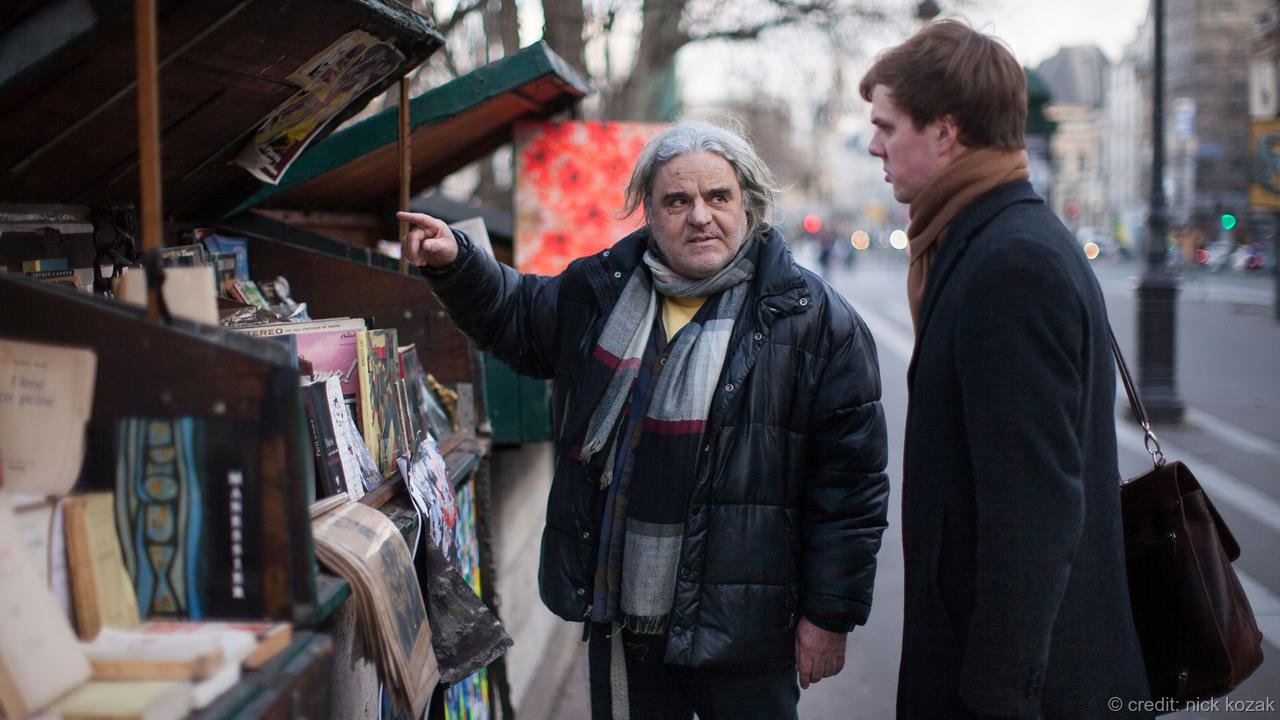
An office with a view (Credit: Credit: Nick Kozak)

An office with a view


One of the most important monuments of Paris are the famous bookshops: booksellers who sell their products every day along the River Seine. Bargaining dates to 1400, the booksellers have been known for centuries as a go-to source for reading material exhausted or rare among locals and travelers who come here to find titles like in Vagrant author Colette biting and controversial or the first edition of the French comic strip The Mischievous Lili, from the early 1900s and has never been reissued. The cultivation of about 20 vendors at the turn of the 17th century, there are now about 240 booksellers in Paris. Their traditional green wooden boxes that dot both banks of the Seine, the Musée d'Orsay in the Arab World Institute, with the highest concentration is at the entrance of the Latin Quarter, home of the famous Sorbonne University. (Credit: Nick Kozak)


The traveller challenge (Credit: Credit: Nick Kozak)

The traveller challenge

But even with 240 vendors lining the banks, competition does not come often in close positions. The 'booksellers biggest challenge over the past 20 years has been the proliferation of e-readers and Internet access, reducing sales of books and make materials outside the print easier to find. To offset declining sales, many have resorted to booksellers supplement their income with memories, which are technically permitted under the regulations of the city that allows the sale of commercial products from four green boxes is assigned to each vendor. But the movement did not sit well with some of the Items population, triggering a debate between suppliers in about what can and can not sell - and it will change a tradition that has been a staple of the Parisian culture. (Credit: Nick Kozak)

The price of growth (Credit: Credit: Nick Kozak)

Price growth

At the end of 1980, Jean-Pierre Mathias left his job as professor of philosophy to become a bookseller. "When I came to my store, I started selling my old books ... I liked the idea of ​​following the philosophy here without having to be a teacher," he said. Mathias only sells books and engravings; He refused to comply with the increasing number of foreign tourists selling souvenirs. "For me, a book will always be a book, and people who love books continue to buy them. The theater did not disappear with the beginning of the film, "he says with a big smile (Credit: Nick Kozak).

From comics to keychains (Credit: Credit: Nick Kozak)

From comics to keychains

Robert Francis was selling comics in his shop for over 35 years. At first, he said, people came to him, if you were looking for a particular comic story. If you do not, then they do online would. Now it is the opposite: they only come if they can not find online. To compensate, Robert memorabilia collection - including ubiquitous statues Eiffel Tower - has increased in recent years. As residents still come to buy a book or two, he said most of his customers are abroad and are more likely to buy his memories of his comics, which are mainly written in French. (Credit: Nick Kozak)


A job with benefits (Credit: Credit: Nick Kozak)

A job with benefits

Items Each is required to maintain their boxes, but beyond that, the work has a lot of freedom. Merchants can set their own hours of light (the stalls are locked once the sun sets); choose the reading material they want to sell; and spend the day enjoying the best views of Paris. Yet many booksellers believe that the city should do more to support tradition as lower sales. One suggestion is that the sellers of electricity installed so it can expand its hours of the night. (Credit: Nick Kozak)

Standing strong (Credit: Credit: Nick Kozak)

Standing strong

Bernard Carver entered the business of selling rare books, 20 years after the arrival of Lebanon without much money. Soon he began living on the streets, he said, and chose comfort in books instead of alcohol. Passion, it binds with certain booksellers. To sell their products, he said, you must be familiar with, boasting that he read everything on your shelf. But even that did not stop the decline in sales, and expressed his anger to the proliferation of sold trinkets. Some marketers have even added folding tables in front of their stalls to expand its collection of memories - a tactic not covered by the regulations of the city. (Credit: Nick Kozak)

A creative solution (Credit: Credit: Nick Kozak)

A creative solution

Many booksellers selling trinkets made in China, including the Eiffel Tower key chains and mugs I love Paris. One of the young traders, George Roman, chose instead to sell antique prints ads created by him and his father, and paintings by students of the prestigious Ecole des Beaux-Arts, conveniently located just behind his store. Therefore, he said, he can sell souvenirs that are made both in France and linked to local culture - a solution, perhaps, taking the best of both worlds. (Credit: Nick Kozak


5 Questions to Ask Before Choosing a Travel Agent

While internet booking motors have made it simpler for voyagers to purchase their own particular flights or lodging rooms, travel specialists still offer a level of administration and skill not offered by a pursuit bot. "When you book on the web, the booking motor or site just comprehends what information you data," brings up Chuck Flagg, proprietor of a Cruise Holidays office in Canton, Georgia. "They don't comprehend what is really critical to and your gang. It doesn't know whether you are a 60-something who still likes to move it up with local people at the club or in the event that you are OK being around children." Travel specialists likewise may have exceptional livens or evaluating not accessible to the overall population.

Here are a few inquiries that can help you pick the right travel specialists for your needs.

  1. Have you gone to my destination? Whether you're making a trip to Paris or Puerto Rico, inquire as to whether your specialists has been there (and provided that this is true, how as of late?). While manuals and sites offer bunches of point of interest on a given destination, they don't generally measure up to being there in individual. "Book information or internet preparing courses by suppliers is entirely unexpected from encountering it firsthand," Flagg says. Lisa Griswold, co-proprietor of the Atlanta-based Pixie Vacations, who represents considerable authority in arranging Disney get-aways, concurs, including that "you don't know how superb a Disney voyage is until you've encountered one: the delight, the tender loving care, the little additional items, the character association."

  2. What is your reaction time? On the off chance that sitting tight a few days for a reaction to a messaged inquiry is going to make you on edge, ask potential operators when they're accessible and how rapidly you ought to expect a reaction. "A few operators are low maintenance specialists, and they work in the nighttimes," Griswold says. "Some are accessible amid the school day. Others do this full time. It's unquestionably shrewd to see whether your calendar can organize with what your specialists can give."


  1. What administrations do you offer? Specialists give differing levels of administration. Some will just book inns and flights and abandon you to fill in alternate points of interest, so in case you're expecting help with supper reservations or ground transportation, inquire as to whether he can deal with those. "A decent specialists is going to help you with any points of interest that you need," Griswold says. "We offer schedule arranging down to what rides they plan to go on, which stops to go in which days and direction that with their suppers."


  1. Do you have any confirmations or accreditation? Flagg recommends getting some information about preparing or confirmations to get a vibe for the specialists' skill. For example, in case you're occupying a journey, you could search out an operators guaranteed through the Cruise Lines International Association. Griswold includes that you additionally can ask how regularly the specialists goes to classes to stay current in the business.


  1. What charges would it be advisable for me to anticipate? A few specialists charge a level expense or an hourly expense for travel counseling, while others acquire commission from the air transport or lodging booked. "Get some information about charges, whether there are occupying expenses or any sort of retraction expenses," Griswold says. "There are some high rates out there, and a few organizations would prefer not to converse with you unless you're willing to submit."


Obviously, while you get some information about the specialists' experience and strategies, she may be testing you also. This can be a decent sign, as Flagg proposes searching for a specialists who asks "why" questions. "This is something online will never ask," he says. "Why would you like to take this excursion? Why did you pick a Disney journey? Did the nourishment offerings settle on this some piece of your choice?" Once a specialists inspires your answers, she will be better prepared to tailor the outing to you and your gang.


Helping Tourism work for Nepal – An update from our partner in Nepal Join today

By Arjun Limbu – Kathmandu Environmental Education Project (KEEP) Nepal

Kathmandu Environmental Education Project (KEEP) is a registered non-profit, non-governmental organization listed on the Tourism Concern online Ethical Travel Guide. KEEP’s mission is to ensure the future ecological and cultural prosperity of Nepal and its people, by maximising the benefits and reducing the negative impacts associated with tourism. 

Tourism has always been vital to Nepal’s economic growth since the mid 1960’s.  People come from all over the world to enjoy this country’s diverse natural beauty, its World Heritage sites, and the exceptionally welcoming people.

Unfortunately, the country of Nepal is situated in a vulnerable area for earthquakes and two of those earthquakes have come very recently causing much devastation for the people of Nepal.

Despite the recent devastating Earthquakes in the country, the most popular trekking destinations in Nepal are open and safe. Nepal’s mountains, jungles, trails, and other aspects of this country’s rich natural beauty are still here for the world to see.

Things are also slowly beginning to go back to how they were before.  To view the situation here more positively, the Nepali people are more welcoming now to tourists than ever before, as Tourism can play a direct part in supporting the local people’s livelihood.

We hope that the recent natural disaster does not slow down tourism, as it is still safe to travel here.  Also, our country is especially welcoming of tourists now so that we can rebuild what has been destroyed and give aid to those in need.

All over the world, people want to help the situation here, and the most direct, sustainable way of doing so is by coming here, visiting our beautiful country and supporting our tourism industry.

So, KEEP would like to welcome to all again in Nepal and support the peoples who suffered from the Earthquake.

To learn more about KEEP go to – http://tourismconcern.org.uk/keep/

post from sitemap